I wasn't surprised to see that BT (British Telecom) is behind the innovative WiFi-sharing plan described in the Slashdot article, "Corporate Encouragement For Sharing Your WiFi".
Maria Pardee, CIO for BT Retail, had described BT's approach to innovation and agile development at the Cutter Summit 2007. (I wrote about that panel in May.) BT is one of those companies that really gets it when it comes to innovation, agile and customer satisfaction.
Showing posts with label Cutter Summit 2007. Show all posts
Showing posts with label Cutter Summit 2007. Show all posts
Monday, October 8, 2007
Friday, May 4, 2007
Cutter Summit 2007: Tuesday Miscellany
Miscellaneous gems from Tuesday's (5/1/2007) conversations at the Cutter Consortium's Summit 2007:
Pope John Paul II smelled like flowers. No perfume; it was just the way he was. This was according to Julio César Margáin, who'd once shown J.P. II around town.
There's a web service out there, somewhere, that accepts a human language choice and will provide you with curse words and phrases in that language. A prankster/instructor used it when he taught SOAP development. One time he had a colleague visiting from Finland when an important business document, written in Finnish, arrived. He used the curse generator to sprinkle Finnish obscenities throughout the document, then he asked his Finnish visitor for help translating. Hilarity ensued. (Note to self: I must find that web service.)
I'm really pleased that I've been listening to Jason Watt's History Podcast. There were a bunch of folks from Mexico at the summit and the conversation drifted at one point into a discussion of the Mexican Civil War (circa 1930). I was so happy to be able to particpate in the conversation! (We really don't cover that war in the U.S. schools.)
At the restaurant (Legal Seafood, which had a good vegetarian pasta primavera), the folks visiting from Poland commented on the large portions at American restaurants. I recalled that Rob Austin had said in a Monday session that China has more honor students than the U.S. has students. So when the topic inevitably turned to American obesity I said, "There's something we've got more of than China. Obese people!" So there.
Pope John Paul II smelled like flowers. No perfume; it was just the way he was. This was according to Julio César Margáin, who'd once shown J.P. II around town.
There's a web service out there, somewhere, that accepts a human language choice and will provide you with curse words and phrases in that language. A prankster/instructor used it when he taught SOAP development. One time he had a colleague visiting from Finland when an important business document, written in Finnish, arrived. He used the curse generator to sprinkle Finnish obscenities throughout the document, then he asked his Finnish visitor for help translating. Hilarity ensued. (Note to self: I must find that web service.)
I'm really pleased that I've been listening to Jason Watt's History Podcast. There were a bunch of folks from Mexico at the summit and the conversation drifted at one point into a discussion of the Mexican Civil War (circa 1930). I was so happy to be able to particpate in the conversation! (We really don't cover that war in the U.S. schools.)
At the restaurant (Legal Seafood, which had a good vegetarian pasta primavera), the folks visiting from Poland commented on the large portions at American restaurants. I recalled that Rob Austin had said in a Monday session that China has more honor students than the U.S. has students. So when the topic inevitably turned to American obesity I said, "There's something we've got more of than China. Obese people!" So there.
Cutter Summit 2007: Contracting Agile Development
 A by-the-bullets summary of the Cutter Summit 2007 interactive breakfast roundtable: "Contracting Agile Development – Thoughts and Experience Around the World", conducted by Jens Coldewey.
Bullets
- Contracting agile projects is a big problem for which Jens admits he doesn't have a complete solution.
- It's an even bigger problem in Germany.
- There are 4 or 5 contract structures defined by civil law, 2 of which may apply.
- The delivery contract. What your contract has to deliver, when it is to be delivered and how much it will cost? Basically: what, when and cost. This is one of the reasons that waterfall is popular. Perceived as very friendly to the recipient of the services, but Jens disagrees and thinks it causes the recipient trouble by forcing people to stick to a contract even when the contract no longer makes sense.
- Service contract. Goes back to the ancient Romans. Marcus Classus(sp?) (Julis Caesar buddy) and fire brigade. Half of Caesar's fortune. This contract specifies help and money. Perceived as being very friendly to contractor.
- There are 4 or 5 contract structures defined by civil law, 2 of which may apply.
- Business views this as an IT problem, which it isn't. (See Jens' chart.)
- Example of a contract someone's done (in U.S.): Service contract, it's not T&M per se. We define the number of patches and the number of hours we'll work. Customer can add a patch if they'd like (which will need more hours).
- Example: Master contract that defines process, payment terms, warranty and such.
- Fixed price contracting goes to the best liar.
- Litigation is big in America. Contrast with Poland, where people just don't sue each other. There's not as much risk of litigation.
- Approach: Discovery phase. Refuse to fixed bid a project. Difficulty here is that you've got to be willing to walk away from the business.
- Two participants work for a state government. They do a lot of T&M. But are under tremedous pressure to do fixed scope, fixed price.
- It's often not about the value delivered, it's about the game. "I win, you lose, I get the promotion."
- Cites Poppendieck study of percentage of functionality that's often used.
- Caps.
- Mary Poppendieck's chapter in the book on contracting. All of the examples come from auto manufacturing.
- Vendor relationship management systems. Doesn't work: Price and willingness to go down on price. Works: Value, efficiency, flexibility.
- Some discussion of shared responsibility approaches.
- The last word: Use a master services agreement at the high level and keep the specificity in short-term agreements.
Cutter Summit 2007: Sunday Miscellany
Sunday (4/29/2007) miscellany from conversations at the Cutter Consortium's Summit 2007:
There was a great at-least-an-hour-long conversation about the English temperament, with participants hailing from Mexico (Julio César Margáin), the U.S. (me, Bart Perkins and Tim Hughes), India (Mehmood Kahn) and England (Paul Robertson). Paul recommendeded Kate Fox' book "Watching the English" so strongly that I've just got to get it now. Mehmood related one of the tidbits from the book: "The English are the only people who would form a one-person queue." See what I mean?
John Tibbets recommended a web site: workflowpatterns.com
Another book recommendation: Bob Charette recommended "In Over Our Heads" by (Cagan?)
Bob Charette has a new book on risk management directed at parents. It'll be coming out in a few months and it's called "Decision Empowerment: A Parent's Guide to Raising Good Decision Makers".
Bob, Ed Yourdon and I were discussing the military's risk management and I recalled a 2001 Washington Monthly cover story by Eric Umansky, "Studs and Duds". (Subtitle: "In Afghanistan, the Navy has weapons that work. So why don't the Army and Air Force?") I've used this article as an example of the benefits of testing early and often. I recommend it to other agilists. (Note to self: Find the link and send it to Bob.) (Update: Found and sent. It's http://www.washingtonmonthly.com/features/2001/0112.umansky.html.)
There was a great at-least-an-hour-long conversation about the English temperament, with participants hailing from Mexico (Julio César Margáin), the U.S. (me, Bart Perkins and Tim Hughes), India (Mehmood Kahn) and England (Paul Robertson). Paul recommendeded Kate Fox' book "Watching the English" so strongly that I've just got to get it now. Mehmood related one of the tidbits from the book: "The English are the only people who would form a one-person queue." See what I mean?
John Tibbets recommended a web site: workflowpatterns.com
Another book recommendation: Bob Charette recommended "In Over Our Heads" by (Cagan?)
Bob Charette has a new book on risk management directed at parents. It'll be coming out in a few months and it's called "Decision Empowerment: A Parent's Guide to Raising Good Decision Makers".
Bob, Ed Yourdon and I were discussing the military's risk management and I recalled a 2001 Washington Monthly cover story by Eric Umansky, "Studs and Duds". (Subtitle: "In Afghanistan, the Navy has weapons that work. So why don't the Army and Air Force?") I've used this article as an example of the benefits of testing early and often. I recommend it to other agilists. (Note to self: Find the link and send it to Bob.) (Update: Found and sent. It's http://www.washingtonmonthly.com/features/2001/0112.umansky.html.)
Tuesday, May 1, 2007
Cutter Summit 2007: Managing IT Priorities
 Rogelio Oliva's "Case Study: Managing IT Priorities at Volkswagen of America" at the Cutter Summit 2007 was an intense experience. We discussed things in a fashion that was so fast and furious that I couldn't possibly keep up.
So I thought I'd try a Web 2.0 trick and create a cloud of the group discussion.
accountable accurate addressing align alignment allocate america applications arbitrary argue argument bandage base beginning being benefits better blah board bonus brings budget business care case category ceo chain choices chose cio classified column commitment company compensated complex complicated congress consolidation constraint continued core corporate costs create creation customer debate decisions defined demand dependencies detect didn different discretionary discussion don elbows employment enterprise erp executive fair federal federalist fight financials fix flawed flow force free functional fund future game generate gets global goals going governance government growth guy happen head heavy helping id idea important inclusive infinite information infrastructure infrequent interesting investment isolation issue larger leaders leadership leeway level list loyalty managers mandate mandatory map mapping marketing million missing model moment money necessarily night number objectives organization overhead people phase platform pot priorities prioritize problem process profit programming projects proposal question ranking re really resources result return revenue risk roi room sale sales sap satisfaction seems sequence settling sham share shift sixty specific speed spend sponsor stable stay stayed story strategy stuff submit supply supposed system table tax technology things threw throw tie top total trump trust type unit unrealistic vague value volkswagen wait whatever willing wiped wish worth wrong year
created at TagCrowd.com
To create the input for the cloud generator I listened closely to the discussion and captured every significant word that I could possibly type.
Cutter Summit 2007: Innovation and Risk Entrepreneurship
In progress
 A by-the-bullets summary of Bob Charette's keynote "Innovation and Risk Entrepreneurship: Learning How to Profit from Risk" and the associated panel discussion at the Cutter Summit 2007.
Keynote bulletsPlays Tower of Power's "What is Hip?" Plug for his the book (out in July 2007): Decisions Empowerment
Panelists
Panel bullets
A by-the-bullets summary of Bob Charette's keynote "Innovation and Risk Entrepreneurship: Learning How to Profit from Risk" and the associated panel discussion at the Cutter Summit 2007.Keynote bullets
- To be innovative you have to have really good decision processes.
- Innovation has been a buzz word in that last three years.
- Cites Robert Hanson (whom he calls really controversial but really, really smart): "The innovations that matter most are the millions of small changes we constantly make to our billions of daily procedures and arrangements."
- Cites Michael Schrage: "It's not what innovators innovate, it's what customers want."
- Cites Adam Smith: "Every individual is continually exerting himself to find out the most advantageous employment for whatever capital he can command. It is his own advantage, indeed, and not that of the society, which he has in view."
- Cites J. B. Say
- Cites Ludwig von Mises
- Cites Joseph Schumpeter
- Cites Frank Knight
- Cites Peter Drucker
- Cites Milton Friedman
- Cites himself: "The exchange of goods and services is an exchange of risk and opportunity."
- New York telephone book had to limit the names of plumbers to no more than six A's at the beginning.
- (He offers to provide reference for his list of three choices: 1. Industrial efficiency, 2. Network services, and 3. Knowledge intensive.
- A decision has not been made unless we have commited some resources that we cannot call back without some cost.
- Cites Rockwell Collins founder Arthur Collins: "I want to employ methods which are capable of giving performance greater than is necessary for the needs of the moment."
- Notes today's news about Microsoft, AT&T and software patents. This could be a huge change in the risk environment around patents.
- Walks us through four distinct stages in the history of Collins Radio Company and Rockwell Collins.
- The rise of Arthur Collins:
- 1930s: Collins Radio Company
- 1950s diversification
- 1960s move into the digital age. Plays the "one giant leap for mankind quote" and notes that it was made over a Collins radio. (Doesn't note that the words got mixed up, which would have muted his point but is kinda funny.)
- 1970s purchase by Rockwell International
- The fall of Arthur Collins:
- Overinvested in created the wondrous C-System for communications & computing convergence
- Ross Perot threatened to buy the company, which forced a hard look at the financials
- William Rockwell bought Arthur Collins out
- So What Happened?
- Too Far Ahead of Customers
- Heroic Hubris
- Violated Own Principles
- Overwhelming Complexity
- Better Became Enemy of Good Enough
- Rentrenchment after the fall:
- Didn't make many staffing changes; only two people left when Collins did.
- Created a "engineer's paradise"
- Successful for a time, but...
- Cloaked in Virtue
- Loss of Major Contract
- Technical Problems in Two Major Programs
- Engineering Arrogance
- Lack of Process Discipline
- Technology Changes
- Lack of R&D Focus/ROI (although lots of R&D investment)
- Ignorance of Business Risk. The feeling was that if you solved an engineering problem you solved a financial problem.
- New Disciplines, linked by a huge overhaul of their risk management (which is when our speaker, Bob Charette, was brought in)
- Compressed 40 financial systems into one (SAP)
- The rise of Arthur Collins:
Panelists
|  |  |  |
| Bob Charette | Lou Mazzucchelli | Bart Perkins | Maria Pardee |
Panel bullets
- "You can't innovate your way out of a forest fire."
- An interesting (to me) example of innovation: The BT Home Hub - BT's home network management system.
- BT was at risk of not being significant
- Took the approach of opening up the network to allow their consumers to get to the services they need.
- Realized that not all innovation comes from within BP, so the key is to enable the connections between their customers and the innovation providers.
- Tom DeMarco notes that this is a different BT from the one that used to have their customers arrested for using savings tricks on cross-Atlantic calls. (Need a link for this; it sounds funny.)
- Discussion of Lou's CASE tool project. (Are they talking about Cadre Technologies?)
- Found its success, unexpectedly, in government work where the tool allowed adherence to (an acquisition?) process.
- Ways that Bart manages risk when investing in companies:
- Does the entrepreneur have personal wealth tied up in the company? (Got to have skin in the game.)
- Will the entrepreneur be reasonable when it comes to ceding control when necessary?
- Does the business plan make sense? (Entrepreneurs are optimistic by nature.)
- Lou: Skin cells versus neurons. You slough skin cells all the time and that's healthy, but you don't want to lose neurons. That's how Web 2.0, for example, will fall out.
- On HP:
- Bob: HP said in the 1990s that 90% of their revenues come from products that are less than three years old.
- Lou: The problem with HP is that they carved off the agile part and left behind something that wasn't recognizable as HP.
- The problem of innovation at all companies.
- Bob asks how many people feel that they can take a we-must-change-180-degrees message all the way to the top of the company? (I was one of only two that raised hands and Bob noted that we both own our own companies. Hee.)
- Lou says that it's got to start at the top, citing the example of Apple radically ditching most of its product line as they were figuring things out (which eventually meant the creation of the iMac).
- Question: Is crisis required for change?
- Bob has never seen a company seriously take on risk management unless it could see the noose.
- Maria: The key risk mitigator is agile software development. Very hard to do because finance and marketeers aren't comfortable
- Risk management as a daily decision-making process.
- Lou gives example of (faxman?), the billion dollar project that would have allowed consumers to easily sent faxes through a local (UPS?) office. On time, on budget. Failed because, by the time it was available, Japan was shipping affordable fax machines.
- Bob: Good decisions don't mean good outcomes. (Oh, I love that one!)
- JP asks: Are we creating problems by ensuring that projects don't fail? It's rare that we'll take projects that are good projects that nonetheless deserve do die and will actually kill that.
- Example of Iridium: Why didn't the project planners spot the lack of the available market?
- Lou: When the potential market becomes smaller than the cost of development, shoot that sucker!
- Concerning the advice to carry extra capabilities and resources. For this most profound, unknowable risk, what do you do?
- Bob's short answer: Spend a little money.
- Bob's longer answer: You've got to be able to name the thing. And (important!) you need to be able to change the name!
- Lou: The Boy Scouts have it. "Be prepared."
- Maria: Agile development and flexible enterprise architecture.
- Two suggestions. 1) The gold rush metaphor is dangerous. You can see the bones of the businesses that provided the coal miners. Having lived through Katrina, I can say not "Let's look at all the causes" but "let's look at all the outcomes". The event might be a hurricane or an atomic bomb, but the outcome is the same.
- Bart: After Katrina, the CIO of the ARC realized they weren't going to be able to reach people and he called a huge meeting of suppliers. By Saturday were able to . The lesson was, be prepared. Tell them the objectives and let them figure out how to respond. ARC came under fire. Truth is they aren't allowed to come in unless they're asked to come in. They were told, Don't come you're not welcome. In Raleigh and other areas.
- Question cites (get this from Christine Davis. Sales turbulence was highest in (?). Assertion 1, IT matters. Assertion 2, the risk is that if you are in a high IT industry and you're not agile you have tremendous risks. So the slower you are the higher your risk.
- Bart: Lesson from the startups: Fail fast. Keep the resources limited.
- Audience member says: In American companies you're not allowed to fail.
- Maria: Allow for safe failure. I have a regular meeting to applaud failure and you have to come to my meeting with something that's failed or something you've cut off.
- Tom cautions the panel not to mistake that for a question; says it's a statement and that it's true.
- Lou: As the CEO you want someone who's had some scar tissues and who has failed.
Cutter Summit 2007: Contracting Agile Development
A by-the-bullets summary of the Cutter Summit 2007 interactive breakfast roundtable: "Contracting Agile Development – Thoughts and Experience Around the World", conducted by Jens Coldewey.Bullets
- Contracting agile projects is a big problem for which Jens admits he doesn't have a complete solution.
- It's an even bigger problem in Germany.
- There are 4 or 5 contract structures defined by civil law, 2 of which may apply.
- The delivery contract. What your contract has to deliver, when it is to be delivered and how much it will cost? Basically: what, when and cost. This is one of the reasons that waterfall is popular. Perceived as very friendly to the recipient of the services, but Jens disagrees and thinks it causes the recipient trouble by forcing people to stick to a contract even when the contract no longer makes sense.
- Service contract. Goes back to the ancient Romans. Marcus Classus(sp?) (Julis Caesar buddy) and fire brigade. Half of Caesar's fortune. This contract specifies help and money. Perceived as being very friendly to contractor.
- There are 4 or 5 contract structures defined by civil law, 2 of which may apply.
- Business views this as an IT problem, which it isn't. (See Jens' chart.)
- Example of a contract someone's done (in U.S.): Service contract, it's not T&M per se. We define the number of patches and the number of hours we'll work. Customer can add a patch if they'd like (which will need more hours).
- Example: Master contract that defines process, payment terms, warranty and such.
- Fixed price contracting goes to the best liar.
- Litigation is big in America. Contrast with Poland, where people just don't sue each other. There's not as much risk of litigation.
- Approach: Discovery phase. Refuse to fixed bid a project. Difficulty here is that you've got to be willing to walk away from the business.
- Two participants work for a state government. They do a lot of T&M. But are under tremedous pressure to do fixed scope, fixed price.
- It's often not about the value delivered, it's about the game. "I win, you lose, I get the promotion."
- Cites Poppendieck study of percentage of functionality that's often used.
- Caps.
- Mary Poppendieck's chapter in the book on contracting. All of the examples come from auto manufacturing.
- Vendor relationship management systems. Doesn't work: Price and willingness to go down on price. Works: Value, efficiency, flexibility.
- Some discussion of shared responsibility approaches.
- The last word: Use a master services agreement at the high level and keep the specificity in short-term agreements.
Monday, April 30, 2007
Cutter Summit 2007: Monday Miscellany
You'll find half the value of an event like the Cutter Consortium's Summit 2007 in the discussions that take place before and after the keynotes, roundtables and what-have-you. Some of Monday's best conversations:
When working on an estimated project, maintain a list of unknowns and keep it visible.
SnapLogic does what Yahoo! Pipes does, but it does it with all kinds of feeds/sources and not just RSS.
Book recommendation: The Devil in the White City.
Clients often ask you to do things that aren't a good idea, but they think they're helping you by having you do the things. In this case, a good approach is to show them a side-by-side comparison of the things they asked you to do and the things you recommend that you do. It gets the discussion right out there in the open.
When working on an estimated project, maintain a list of unknowns and keep it visible.
SnapLogic does what Yahoo! Pipes does, but it does it with all kinds of feeds/sources and not just RSS.
Book recommendation: The Devil in the White City.
Clients often ask you to do things that aren't a good idea, but they think they're helping you by having you do the things. In this case, a good approach is to show them a side-by-side comparison of the things they asked you to do and the things you recommend that you do. It gets the discussion right out there in the open.
Cutter Summit 2007: Web 2.0 panel
A by-the-bullets summary of the Cutter Summit 2007 Web 2.0 panel.
Panelists
Bullets
Web 2.0 sites that the panel mentioned
Panelists
 |  |  |  |  |
| Stowe Boyd | Sylvia Marino | JP Rangaswami | Andrew McAfee | Ed Yourdon |
| /Message | Sylvia Marino | Confused of Calcutta | The Impact of Information Technology (IT) on Businesses and their Leaders | The Yourdon Report |
Bullets
- Something interesting to follow: The impact of blogs on politics.
- Is this the de-SAP-ification of the enterprise?
- Andrew: No. Sees a small minority of organizations implementing these things and a huge portion of the organization that's hostile to it.
- Stowe: Draws parallel to companies being blindsided by the Internet.
- Ways of keeping up:
- Techmeme
- Andrew: "Trying to determine what is going on in the world by reading newspapers is like trying to tell the time by watching the second hand of a clock." ~Ben Hech
- What about companies' fears of openness?
- A little role-playing as illustration:
- I don't want my customers telling one another about my product's flaws.
- I don't want my employees telling people what it's like to work here.
- I want control.
- Answers:
- Sylvia: Heads already in the sand. Consumers are already talking about the flaws in your product. And employees are already talking in the hallways.
- JP: The last thing you want to do when you have fear is to drive the discussion underground.
- Ed: Cluetrain Manifesto. Also notes that Cluetrain Manifesto coauthor David Weinberger has just today released a new book: "Everything is Miscellaneous".
- Stowe: Converstaion is going on already. You don't control your brand any more.
- Andrew: Agree with others regarding the Internet. But on the Intranet, you have arbitrarily precise control. JP's approach is enlightened, but the last thing that many companies want is to provide a forum for their employees' complaints.
- A little role-playing as illustration:
- How would you Web-2.0-ize Cutter's web site?
- JP: First thing, release the content. Remember the Cluetrain: "Markets are conversations." Stop calling it content. Make it accessible to all. Then allow ratings and recommendations.
- Andrew: Baby steps. Slap a Google search on the site. Make the site as useful as possible
- The kind of arguments put forward today against Web 2.0 are like the arguments that were put forward against email, the Internet, instant messaging, the Blackberry, the iPod.
- Andrew tells a great story about JP and Eliot Spitzer, which I should really write up instead of just telling you how great it was.
- Will our systems be connected?
- Andrew: No, no, no, no. Technologists have been telling us for years that our systems would be connect by OO, web services, SOA, and now the semantic web. Computers are like old testament gods: all rules and no mercy. Quotes Norbert Wiener (American mathemetician, 1894-1964): "The world of the future will be an ever more demanding struggle against the limits of our intelligence, not a comfortable hammock in which we can lie down to be waited upon by our robot slaves."
- Ed: Lots of experiments taking place in the Web 2.0 world. Only a few will survive. One of the best things about Web 2.0 is the APIs made available by companies like Google for mashups. Speaking of mashups: Yahoo! Pipes.
- JP: Paying someone to move data that belongs to me is something that's in the past.
- Andrew: Standard is the only one-word oxymoron in the English language.
Web 2.0 sites that the panel mentioned
- Stumbleupon
- Techmeme
- Yahoo! Pipes. (After the panel, Sylvia told me if I like Yahoo! Pipes then I'll love SnapLogic.)
- OpenID
Cutter Summit 2007: Stowe Boyd on "Web 2.0 A Social Revolution"
A by-the-bullets summary of Stowe Boyd's keynote: Web 2.0: A Social Revolution
Boyd Stowe's blog is /Message. Here's his blurb from the Cutter site:
Bullets
Web 2.0 sites that Stowe mentioned
Boyd Stowe's blog is /Message. Here's his blurb from the Cutter site:
Mr. Boyd has a BS from the University of Massachusetts, Amherst, and a MS Computer Science from Boston University. He can be reached at consulting@cutter.com.
Bullets
- One of W.C. Fields' leading ladies spotted him on a back lot one day as he was leafing through a Bible. She asked what he was doing. He replied, "Looking for a loophole."
- Blogging is the most important thing Stowe has done in his life.
- 70% of the vendors on the trade show floor at (recent Web 2.0 conference) were working on enterprise apps.
- Shows us an old post article he'd written in 2003, "The Game Neverending: an IM Community" and discusses the movement of Ludicorp to Flickr.
- The Web 2.0 landscape:
- The Web 2.0 landscape as a collection of metaphors: "Web as Platform" "Social Web" "Open" "Bottom-up" "Simple, Focused Applications" "Open Source Technologies"
- The Web 2.0 landscape as a collection of technologies: LAMP, RSS, XML, AJAX, Ruby on Rails etc, Social Media
- The Web 2.0 landscape as a collection of icons:
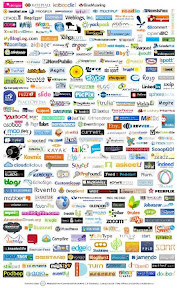
- Why is Web 2.0 not simply the next bubble? What's different this time?
- The economics are different. (Lower cost.)
- The technologies are different.
- The players and their goals are different. (Their end game isn't an IPO. They expect to live off of the product or to be acquired.)
- Freemium.
- The tone in the newsroom has recently changed drastically to be more positive about blogs. The NY Times recently published its first article, ever, that didn't portray blogs as evil.
- Blogging is big in France, Japan, South Korea. Not so big in Germany.
- Flow apps. Example: Twitter. (He should have mentioned Yahoo! Pipes, I think.)
- David Weinberger on Tags:
Tags matter for social reasons. They allow the grassroots to create the way in which stuff is classified, instead of having to file things in pre-built categories. But the words we use to tag things depend on our intentions and our social context. Find people who tag items the same way as you do and you've now found a social group based not around shared interests but around shared ways of thinking and shared ways of speaking: Communities of tags.
(Ed Yourdon tells me that Weinberger's new book just came out this morning.) - The self is "...at the still point of the turning world." (Here, Stowe is quoting the poem Burnt Norton, one of a T.S. Eliot's "Four Quartets.")
- Son of Web 2.0 (which Stowe refuses to call Web 3.0) trends
- Broadband becomes ubiquitous
- More capable mobile devices
- Browser no longer the sole window on the Web.
- The rise of Traffic-and-Flow
Web 2.0 sites that Stowe mentioned
- Stowe shows us Dopplr (which is still not fully public). He calls it the "ships that pass in the night" app.
- Stowe uses Feed Crier as an RSS reader.
- Blinksale for invoicing.
- Twittr, which a fried calls "ambient intimacy."
- Techmeme
- Stowe belongs to Change.org, where he recommended that people give up their cars. (Stowe doesn't have a car.)

Cutter Summit 2007: Innovation Panel
Panelists
My favorite points
 |  |  |  |
| Rob Austin | Lee Devin | Fernando Durán | Mehmood Kahn |
My favorite points
- Rob Austin suggests a parallel between innovative business projects and theatrical productions, noting that a theatrical production is an iterative, creative process that has a definite delivery time: opening night. I like that point, even though I now have Cole Porter's "Another Opening Another Show" running through my head.
- "People confuse formality and discipline." - Jim Highsmith
- "CIOs now understand the need to do things iteratively. Now they're fighting battles with the institutional surroundings." "Iterative budgets for an iterative process." - Rob Austin
Cutter Summit 2007: Rob Austin Keynote "Learning from Expert Innovators Around the World"
Here's my by-the-bullets recap. If you want a more considered discussion, go to Ed Yourdon's blog. (Ed is sitting next to me as I type this.) (Hi, Ed.)- VIPP designer trash cans were marketed as a fashion item. Cites article "Dansk skraldespand pa Louvre".
- Companies either compete on cost ("Buy mine, it's just as good but cheaper.") or they compete on value differentiation ("Buy mine, it costs more but it's better.").
- "Expert assembly by European craftsmen."
- The action is on the revenue side of the income statement.
- Wal-Mart's midlife crisis (which is the cover of this week's Business Week).
- In the long run, can you compete on cost against new brands from China and India? Rob's answer: No.
- China has more honor students than the U.S. has students.
- Something the CIO of an insurance company executive said to Rob recently: "Chunk it, routinize it, digitize it, automate it and send it offsore."
- IT needs a new trick.
- Are the common principals, processes, and practices in use by acclaimed innovators across a range of fields?
Sunday, April 29, 2007
Cutter Summit 2007: Focus on Innovation
I'm at the Cutter Consortium's Summit 2007; the 11th of their annual summits.
This year's topic is "Focus on Innovation." More posts to follow.
This year's topic is "Focus on Innovation." More posts to follow.
Subscribe to:
Posts (Atom)